
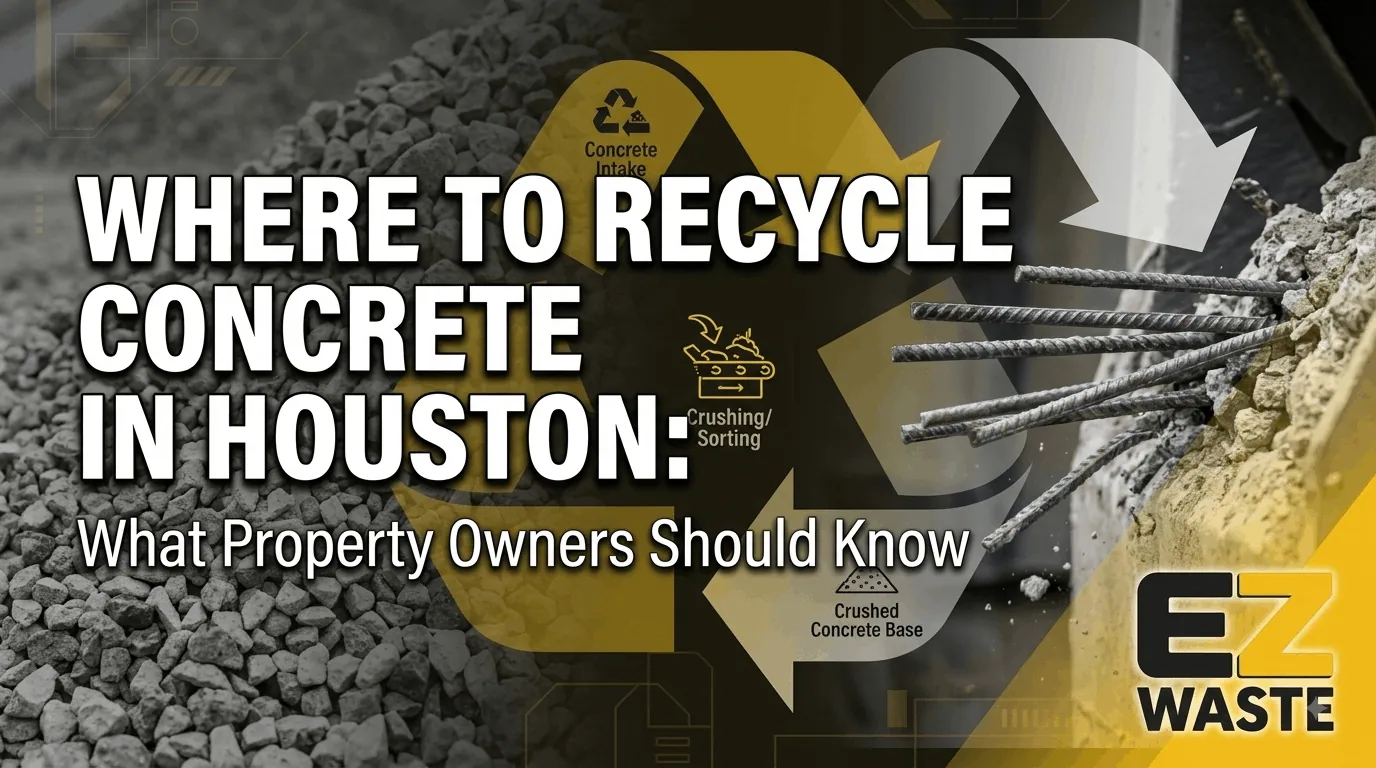
When executing a demolition project, replacing a driveway, or clearing commercial land in the Greater Houston area, figuring out where to dump concrete waste efficiently is critical. Plain heavy concrete debris cannot simply be thrown into regular municipal trash bins. Property owners, general contractors, and DIY project managers must choose between self-hauling concrete to local recycling yards or utilizing heavy-debris roll-off container rentals.
Direct Answer: Clean concrete waste can be dropped off for free concrete disposal at designated EZ Waste processing facilities in Greater Houston. Here, raw concrete debris is crushed, screened, and re-processed into high-grade crushed concrete base materials, eliminating landfill tipping fees and providing an eco-friendly waste management loop.
What Is Concrete Recycling and How Does the Process Work?
Concrete recycling is the mechanical process of taking broken concrete slabs, foundations, sidewalk cutouts, and paving debris and crushing them down into reusable aggregate materials. Instead of allowing heavy masonry waste to take up valuable capacity in Texas landfills, industrial crushers process the rubble into functional sizes such as 3/8-inch road base with fines, 1 ½-inch screened concrete, and 3×5 bullrock.
At our regional drop-off locations, incoming material undergoes a structured intake protocol:
- Sorting & Intake: Loads are evaluated to verify that material is non-hazardous and free of restricted contamination such as excessive soil, wood trash, or household garbage.
- Primary & Secondary Crushing: Heavy impact crushers break massive concrete chunks down into uniform aggregate sizes.
- Magnetic Separation: Industrial magnets extract embedded steel rebar and wire mesh from the crushed aggregate stream.
- Screening & Grading: The resulting material is sized and stockpiled for immediate resale as aggregate for driveways, parking lot sub-bases, and construction pad foundations.
Recycling Concrete vs. Hauling Away: What Property Owners Should Choose
Property owners and site managers often weigh whether to haul concrete debris themselves or hire a professional container service. The decision typically comes down to truck capacity, labor availability, and total debris volume.
| Disposal Route | Best Suited For | Primary Benefits | Key Considerations |
|---|---|---|---|
| Self-Hauling (Direct Drop-Off) | Contractors or homeowners with flatbed trucks or heavy-duty trailers moving single loads. | Zero tipping fees at free concrete recycling drop-off sites for clean loads. | Requires personal heavy vehicles, loading labor, and driving time to recycling yards. |
| Roll-Off Dumpster Rental | Large driveway tear-outs, building demolitions, and ongoing job site clearing. | On-site loading container, scheduled site drop-off, and direct transport by heavy haulers. | Requires strict adherence to container weight thresholds and heavy-debris loading limits. |
| Full-Service Concrete Hauling | Commercial site clearing where heavy machinery (excavators/skid steers) loads transport fleets directly. | Rapid site clearing without requiring internal crew transport time. | Requires clear site access for heavy tandem haulers and loading equipment. |
When You Should Drop Off Concrete Directly
If you possess a heavy-duty pickup truck or utility trailer and have an efficient way to load broken slabs, self-hauling directly to an authorized yard is highly cost-effective. Visiting an official Houston concrete disposal site allows you to unload clean masonry debris directly at processing centers without paying standard municipal tipping fees.
When You Need a Heavy-Debris Roll-Off Dumpster
When handling larger volumes, such as an entire foundation removal or multi-ton patio tear-out, self-hauling becomes labor-prohibitive. Renting a low-boy or heavy-debris container allows you to deposit material continuously on-site. Once filled, specialized roll-off trucks transport the heavy load directly to concrete recycling facilities for processing.
Factors Affecting Concrete Disposal Options in Greater Houston
Before transport or container loading begins, property owners must understand the operational variables that determine concrete drop-off acceptance and total project costs.
1. Load Contamination Levels
Free concrete recycling programs rely on receiving clean material that can be fed into mechanical crushers without damaging equipment. Unacceptable contamination includes excessive dirt, trash, lumber, asphalt, or liquid waste. While light rebar embedded inside slabs is removed via magnetic separators during primary crushing, heavily trash-laden loads may be rejected or assessed standard landfill contamination fees.
2. Volume and Weight Limits
Concrete is extraordinarily dense, weighing approximately 2,000 to 2,400 pounds per cubic yard. When utilizing container services, you must use designated low-boy or specialized heavy-debris dumpsters. Overloading standard high-wall containers with concrete can exceed Texas Department of Transportation highway weight legal limits, preventing transport trucks from safely hauling the bin off-site.
3. Proximity to Certified Recycling Drop-Off Yards
Hauling concrete across long distances in Houston traffic increases fuel consumption and labor costs. Selecting a recycling network with multiple regional yards ensures faster turnaround times for work crews and lowers overall haul fees.
EZ Waste Concrete Drop-Off Facilities and Acceptable Debris Criteria
EZ Waste provides contractors, commercial crews, and property owners with accessible concrete recycling centers placed strategically around the metro area. You can find convenient drop-off options at our primary regional facilities:
- Houston Wallisville Facility: 10217-C Wallisville Rd, Houston, TX 77013
- Crosby Location: Crosby Gulf Pump Yard serving East Harris County
- Conroe Location: Conroe Riverbrook Yard serving North Montgomery County
Intake Rules for Free Concrete Disposal
To qualify for free concrete drop-off at EZ Waste yards, incoming loads must meet clear intake standards:
- Allowed Debris: Clean concrete slabs, broken sidewalk pavers, concrete blocks, structural footings, and concrete containing standard reinforcing rebar or wire mesh.
- Prohibited Materials: Municipal trash, hazardous liquids, dirt/soil over allowed thresholds, job site trash, wood debris, or general construction waste mixed into the concrete load.
“Recycling concrete reduces landfill waste, conserves natural aggregate resources, and lowers overall project material costs when reprocessed into construction base layers.” – U.S. Environmental Protection Agency
How EZ Waste Streamlines Concrete Material Handling
Managed under the technical oversight of Bernard Gonzalez Jr. and the Gonzalez family founding partners, EZ Waste brings more than 25 years of local hands-on expertise to Greater Houston’s waste management and material supply markets. We operate a complete closed-loop concrete lifecycle:
- Collection & Hauling: We supply heavy-duty roll-off dumpster rentals or full-service dispatch fleets to haul concrete directly from your job site.
- Free Direct Intake: Contractors and property owners can bring clean concrete loads directly to our yards for free disposal.
- Processing & Resale: Incoming debris is crushed into high-density recycled aggregates, providing regional builders with affordable road base and sub-ballast materials.
Whether you need to clear a single residential driveway or require multi-container rotation for a commercial demolition project, our team manages the entire process smoothly.
Ready to manage your job site waste efficiently? Call EZ Waste to ask about concrete disposal, hauling, recycling, and crushed concrete availability.
Industry Environmental Impact
According to official data published by the
U.S. Environmental Protection Agency (EPA),
more than 85% of structural construction and demolition waste produced annually in the United States consists of concrete and asphalt, with over 95% of recovered concrete being successfully recycled and diverted away from public landfills.