
Every dig produces more dirt than it looks like it will. Once excavation starts, loose soil piles up fast, blocks access, and turns into mud after the first Gulf Coast storm. That’s usually the point when a homeowner or contractor pulls out their phone and types “dirt hauling near me.” Whether you are digging a foundation, putting in a pool, or regrading a lot, knowing when to call a hauling service keeps the job safe and on schedule. This guide covers the projects that usually need professional hauling, how to plan truckloads and site access, and which materials you may need brought back in.
When Should You Hire a Dirt Hauling Service?
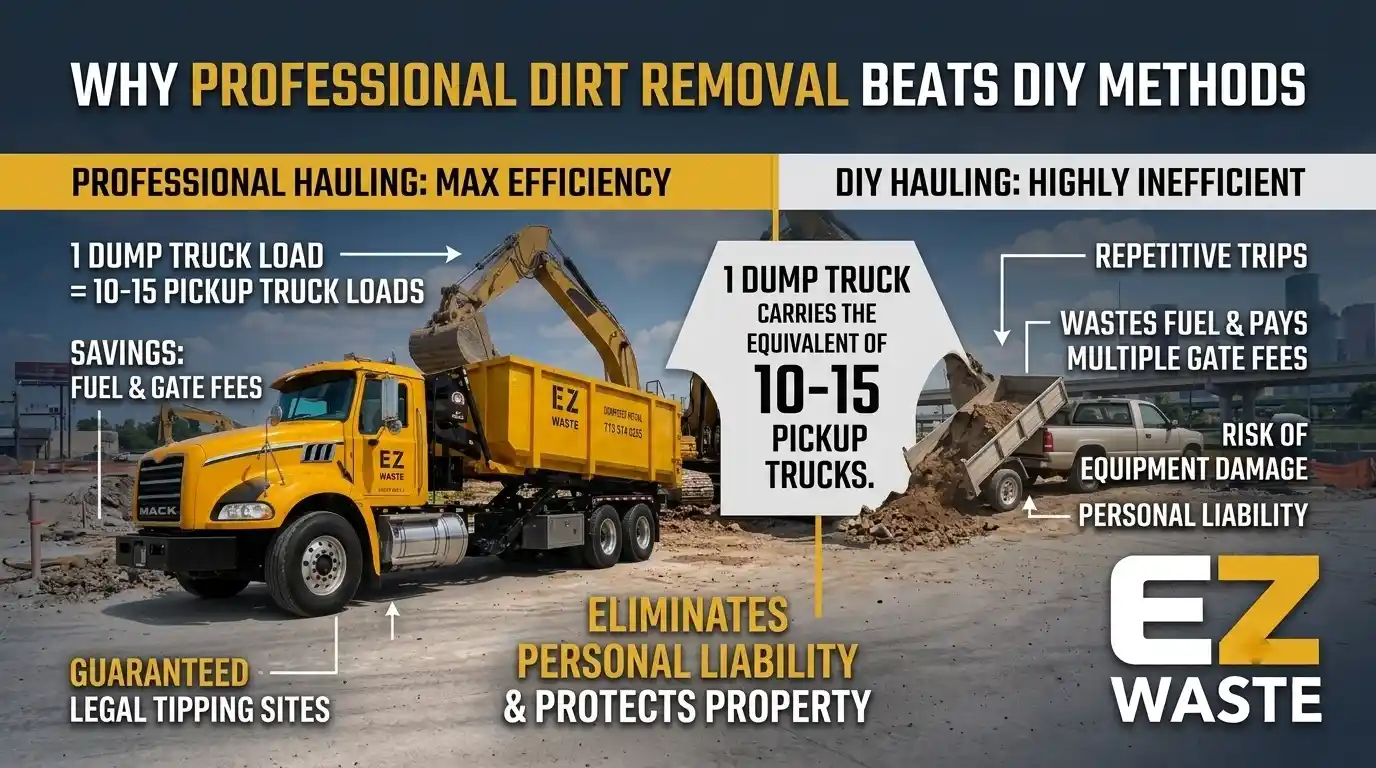
Hire a dirt hauling service when your project produces more soil than a pickup or utility trailer can move in a trip or two, when the soil has nowhere to go on site, or when it is slowing down the next phase of work. Excavation, pool digs, grading, and post-demolition cleanup are the most common examples, and they are the jobs our dirt hauling in Houston service is built for.
Soil is heavier and bulkier than most people expect. A cubic yard can weigh a ton or more, and wet clay weighs even more. Excavated soil also takes up more space than it did in the ground, an effect called swell. That combination is why small piles become big problems quickly.
Common Projects That Need Construction Dirt Removal
Foundation and Utility Excavation
Digging for slabs, footings, or underground utilities creates large amounts of clay and subsoil. Leaving it piled near the work area crowds equipment, creates hazards near open trenches, and gets in the way of concrete and plumbing crews. Scheduled construction dirt removal keeps the site open for the next trade.
Swimming Pool Digs
Residential pool projects often produce more soil than a backyard can hold, especially on smaller Houston lots. Because access is usually limited to a driveway or side yard, the hauler needs a plan for where trucks will stage and how often they can cycle in and out.
Site Grading and Drainage Work
Regrading a lot to improve drainage moves soil from high spots to low spots, and there is often extra left over. Hauling it away lets grading crews finish the final contours without working around stockpiles.
Post-Demolition Cleanup
Removing a driveway, slab, or old structure leaves behind broken concrete and disturbed soil. Keep the two separate when possible. Clean concrete can often be recycled into crushed concrete base, while soil follows its own hauling and disposal path.
Fill Dirt, Topsoil, and Bank Sand: Know Your Materials
Knowing what kind of soil you are moving helps you plan where it goes and what you might need to bring back in.
Fill Dirt Removal
Fill dirt is the subsoil below the surface layer. It contains little organic material, so it compacts well for building pads and backfill. When a project produces more than it can use, fill dirt removal clears the excess so it does not sit on site through the rest of the job.
Topsoil for Final Grading and Landscaping
Topsoil is the darker, nutrient-rich surface layer that supports grass and plants. Many projects strip it at the start and need fresh topsoil delivered at the end for lawns, beds, and final grading.
Bank Sand for Backfill and Bedding
Utility lines, pipe bedding, and slab prep often call for clean bank sand. Scheduling delivery to match your excavation timeline lets crews backfill right after installation instead of waiting on material.
Planning Truckloads and Hauling Logistics
Not all hauling services in Houston work the same way. The right setup depends on how much soil you have, how fast it needs to go, and how much room the site offers. Most projects use one of these approaches:
| Option | Best For | Site Considerations |
|---|---|---|
| Dump truck hauling | Excavation, pool digs, and grading with large volumes to move quickly | Needs firm ground, room to turn, and a clear loading area for equipment |
| 10-yard roll-off dumpster | Smaller digs, hand excavation, and jobs that produce soil over several days | Needs a flat, stable spot; heavy loads reach weight limits quickly |
| 20-yard roll-off dumpster | Mixed cleanup with some soil or concrete | Fill only about halfway with dirt to stay within weight limits |
When you request a quote, share the approximate size of the dig, the type of soil, and whether the ground is wet. That information helps the hauler match the right equipment and number of loads to your project.
Jobsite Safety and Access for Dirt Removal
Loading trucks is one of the riskiest parts of any earthwork job. Excavators swing, buckets drop soil from height, and trucks back into tight spaces. Federal excavation rules address this directly. OSHA’s excavation standard, 29 CFR 1926.651, states:
“No employee shall be permitted underneath loads handled by lifting or digging equipment. Employees shall be required to stand away from any vehicle being loaded or unloaded to avoid being struck by any spillage or falling materials.”
Keep ground crews clear of the loading zone, and agree on hand signals or radio contact between operators and spotters before loading begins.
How to Prepare Your Site Before Dirt Hauling
Whether you hire a local crew or search for dirt removal near me the morning of the dig, a few checks before the trucks arrive can prevent delays and damage:
- Firm up the haul route: Soft, wet clay can trap loaded trucks. Lay down rock, mats, or boards where trucks will drive.
- Check overhead clearance: Look for power lines, tree limbs, and roof overhangs along the route and at the loading area.
- Call 811 before digging: Have underground gas, water, and electric lines marked before any excavation starts.
- Plan for street use: If trucks or containers will occupy a public street, confirm whether your city requires a permit.
Frequently Asked Questions
What is the difference between fill dirt and topsoil?
Fill dirt is subsoil with little organic material, used for backfill, building pads, and leveling low spots. Topsoil is the nutrient-rich surface layer used for lawns, gardens, and final landscaping.
Can I put dirt in a dumpster?
Yes, but use the right size. A 10-yard dumpster is the usual choice for dirt because soil is heavy. A 20-yard container can take dirt if it is filled only about halfway.
How do I know how much dirt I need hauled?
Measure the length, width, and depth of the dig in feet, multiply them, and divide by 27 to get cubic yards. Then plan for extra, since excavated soil expands once it is loosened.
Work with a Local Houston Hauling Partner
The right hauling partner keeps soil moving, keeps your site safe, and brings in the materials you need to finish the job. EZ Waste is a family-owned Houston company with more than 25 years of experience moving dirt, concrete, and asphalt across the Greater Houston area. Call EZ Waste for dirt hauling, material hauling, or jobsite cleanup support.