
An overflowing dumpster or a scrap pile blocking the driveway can stall subcontractors and create safety hazards. Whether you are running a retail buildout downtown, a remodel in Spring, or a demolition job along the Energy Corridor, a clear debris plan keeps the project moving. A quick search of construction debris removal near me good way to solve this problem. EZ Waste offers debris hauling services like concrete hauling throughout the Houston area. If you are not sure this is the right service for you, this guide covers the common types of jobsite waste, when to choose hauling over a roll-off dumpster, and how to schedule service without delays.
What Is Construction Debris Removal?
Construction debris removal is the collection, transport, and disposal of waste created during building, renovation, or demolition work. Contractors usually handle it in one of two ways: a crew loads and hauls the debris away in a single visit, or a roll-off dumpster stays on site so workers can toss scrap as they go. The right choice depends on how much debris you have, how long the job runs, and how much space the site offers.
Common Types of Construction Debris on Houston Jobsites
Sorting debris by type helps you pick the right container, avoid rejected loads, and keep disposal costs predictable.
Concrete, Brick, and Asphalt
Heavy materials like concrete, brick, pavers, and asphalt add weight quickly, even in small amounts. A large container filled with concrete can exceed its weight limit long before it looks full, so heavy debris usually goes in a smaller box or a dedicated load. Clean concrete also has a second life. It can be recycled into crushed concrete base, and EZ Waste supplies recycled crushed concrete for driveways, parking lots, and construction projects across Houston.
Wood, Drywall, Roofing, and Mixed Debris
Framing lumber, drywall, shingles, insulation, packaging, and old fixtures make up most of the volume on remodels and buildouts. These materials are bulky but relatively light, so they fit well in larger roll-off containers.
Materials That Need Special Handling
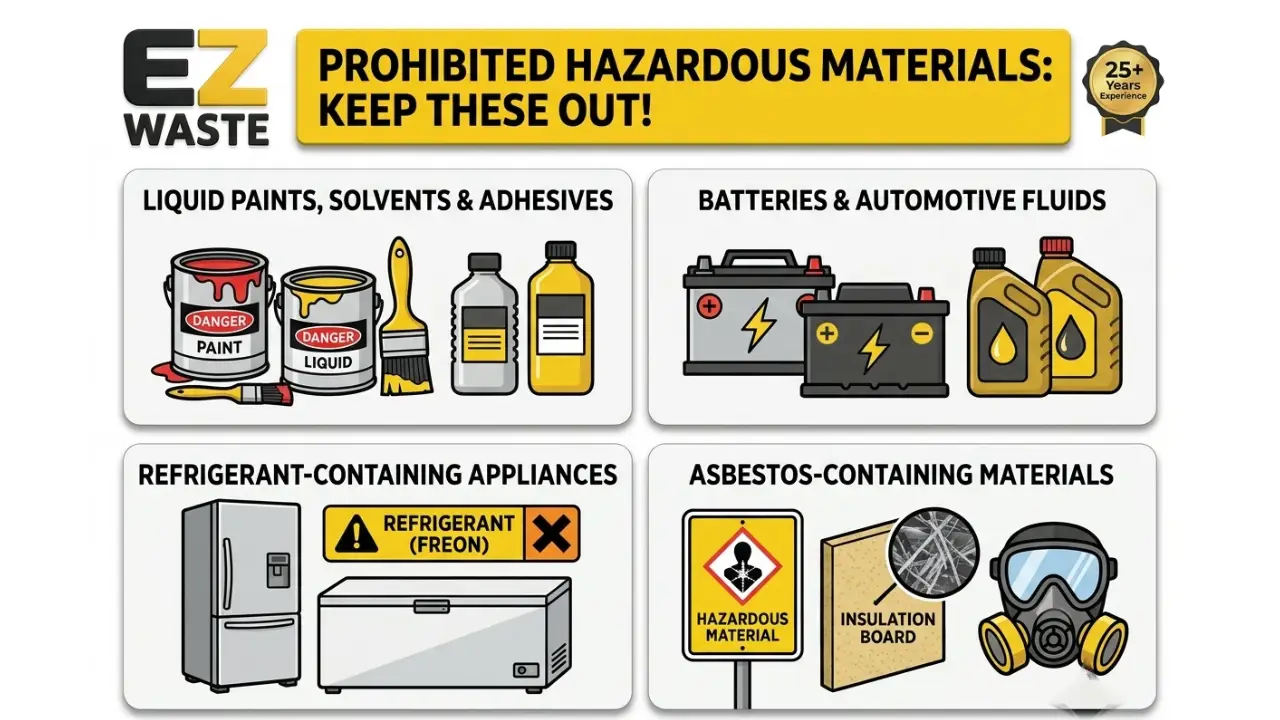
Most landfills and transfer stations will not accept hazardous materials in a standard dumpster. Keep these out of your container and arrange separate disposal:
- Liquid paint, solvents, and adhesives
- Batteries, motor oil, and other automotive fluids
- Appliances that contain refrigerants
- Asbestos-containing materials, which require licensed abatement
Ask your provider for their full list of accepted and prohibited items before the first load.
Construction Debris Hauling vs. Roll-Off Dumpster Rental
Both options clear your site. The difference is timing, space, and who does the loading.
When Construction Debris Hauling Makes Sense
Construction debris hauling works best when you have a pile that needs to go now. A crew arrives, loads the debris, and leaves the same day. It suits tight urban sites with no room for a container, one-time cleanouts, and jobs where debris is blocking access. For fast pickups like these, see our services like concrete debris removal in Houston service.
When a Roll-Off Dumpster Is the Better Fit
For multi-week builds, phased renovations, or ongoing demolition, an on-site dumpster is usually more efficient. Crews toss scrap as they work, and you schedule swaps as the container fills. Larger jobs often benefit from a commercial dumpster rental in Houston that stays on site through every phase.
| Factor | Debris Hauling | Roll-Off Dumpster |
|---|---|---|
| Best for | One-time cleanouts and existing piles | Multi-day or multi-phase projects |
| Space needed | Room for a truck during loading | A flat, stable spot for the container |
| Who loads it | The hauling crew | Your crew, as they work |
| Typical pricing | Based on volume and labor | Based on container size, rental period, and weight |
What Size Dumpster Do You Need?
Booking a construction dumpster rental in Houston is easier when you know what is going in it. The right size prevents overflow, overweight fees, and extra swaps. EZ Waste’s 20, 30, and 40-yard containers all measure 22 feet long by 8 feet wide, with the height increasing by size:
- 10-yard: Built for heavy materials like concrete, asphalt, brick, tile, and dirt, plus small remodels.
- 20-yard (3 feet high): Roofing jobs, small commercial projects, and remodels. It can take concrete or dirt if filled only about halfway.
- 30-yard (5 feet high): Mid-size commercial projects, large remodels, and light demolition. Not for heavy demolition materials.
- 40-yard (8 feet high): New construction, large commercial projects, and bulky, lightweight debris. Not for heavy demolition materials.
Keeping Your Jobsite Clean, Safe, and OSHA Compliant
Debris is more than a housekeeping issue. Scrap lumber, metal cutoffs, and loose packaging cause trips, puncture injuries, and blocked exits. Federal rules address this directly. OSHA’s housekeeping standard for construction, 29 CFR 1926.25, states:
“During the course of construction, alteration, or repairs, form and scrap lumber with protruding nails, and all other debris, shall be kept cleared from work areas, passageways, and stairs, in and around buildings or other structures.”
A simple daily cleanup routine, with a container close to the work area, makes that standard much easier to meet.
How to Schedule Debris Removal Without Delays
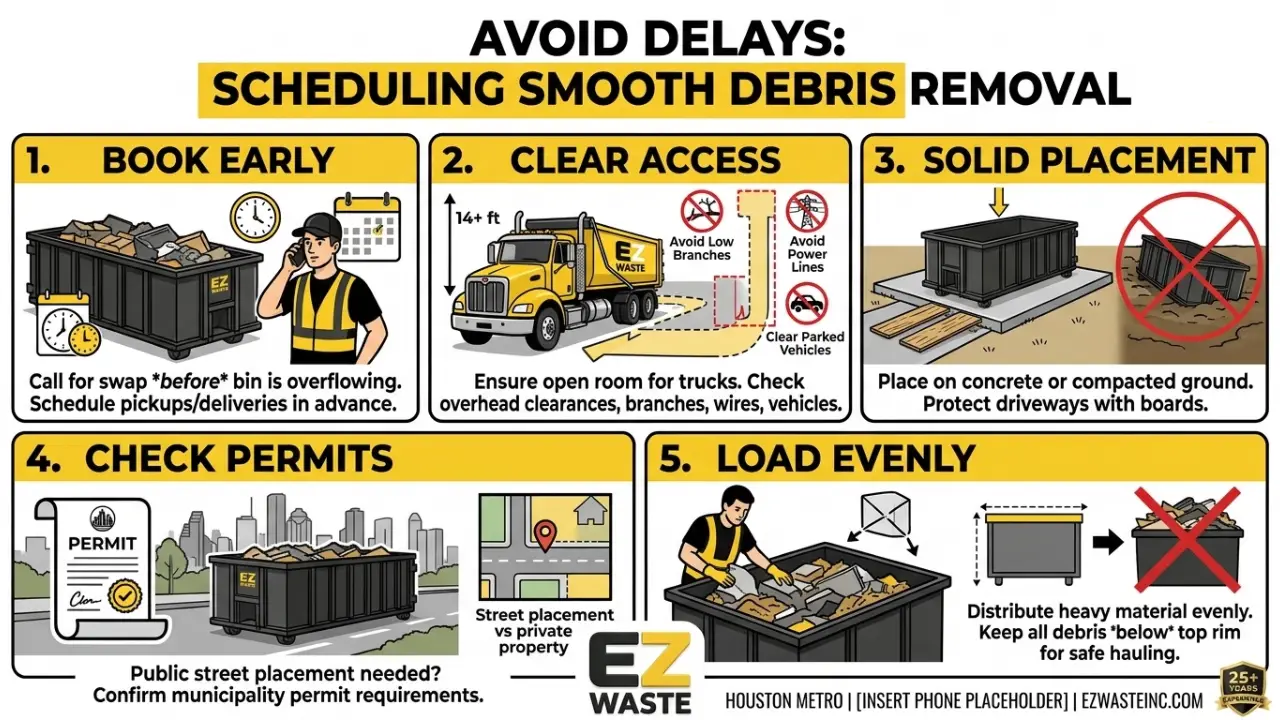
A quick search for debris removal near me will turn up plenty of options, but the service only helps if it shows up when you need it. A little planning on your end prevents most delays:
- Book early: Request delivery or a swap before the container is full, not after. EZ Waste offers same-day or next-day service, but advance notice helps during busy weeks.
- Clear the path: Roll-off trucks need open room to back in and overhead space to unload. Check for low branches, power lines, gates, and parked vehicles.
- Pick a solid surface: Place containers on concrete, compacted ground, or boards to protect driveways and pavement.
- Check permit rules: If the container will sit on a public street, confirm whether your city requires a permit.
- Load evenly: Keep debris below the top rim and spread the weight so the container can be hauled safely.
Frequently Asked Questions
Should I choose debris hauling or a dumpster rental?
Choose debris hauling for a one-time pile or a site with no room for a container. Choose a roll-off dumpster for projects that generate debris over several days or weeks, since your crew can load it as they work.
What size dumpster is best for concrete?
A 10-yard dumpster is the usual choice for concrete, brick, and asphalt because heavy materials reach weight limits quickly. A 20-yard can handle concrete or dirt if it is filled only about halfway.
What can’t go in a construction dumpster?
Hazardous materials such as liquid paint, solvents, batteries, motor oil, refrigerant-containing appliances, and asbestos are generally not accepted. Ask your provider for their prohibited items list before loading.
Work with a Local Houston Debris Removal Partner
A reliable local partner keeps your jobsite clear, your crew productive, and your schedule on track. EZ Waste is a family-owned Houston company that has served contractors and homeowners for more than 25 years, with disposal sites in Houston, Crosby, and Conroe. Contact EZ Waste for construction debris hauling or roll-off dumpster rental.