When loading a roll-off container for a home renovation, roof replacement, or commercial project in the Greater Houston area, understanding what can you not put in a dumpster is essential to keep your cleanup on schedule and avoid unexpected expenses. While standard containers accommodate most construction materials, yard waste, and general household clutter, local landfills strictly prohibit items that are toxic, flammable, reactive, or environmentally hazardous.
What Cannot Go in a Dumpster?
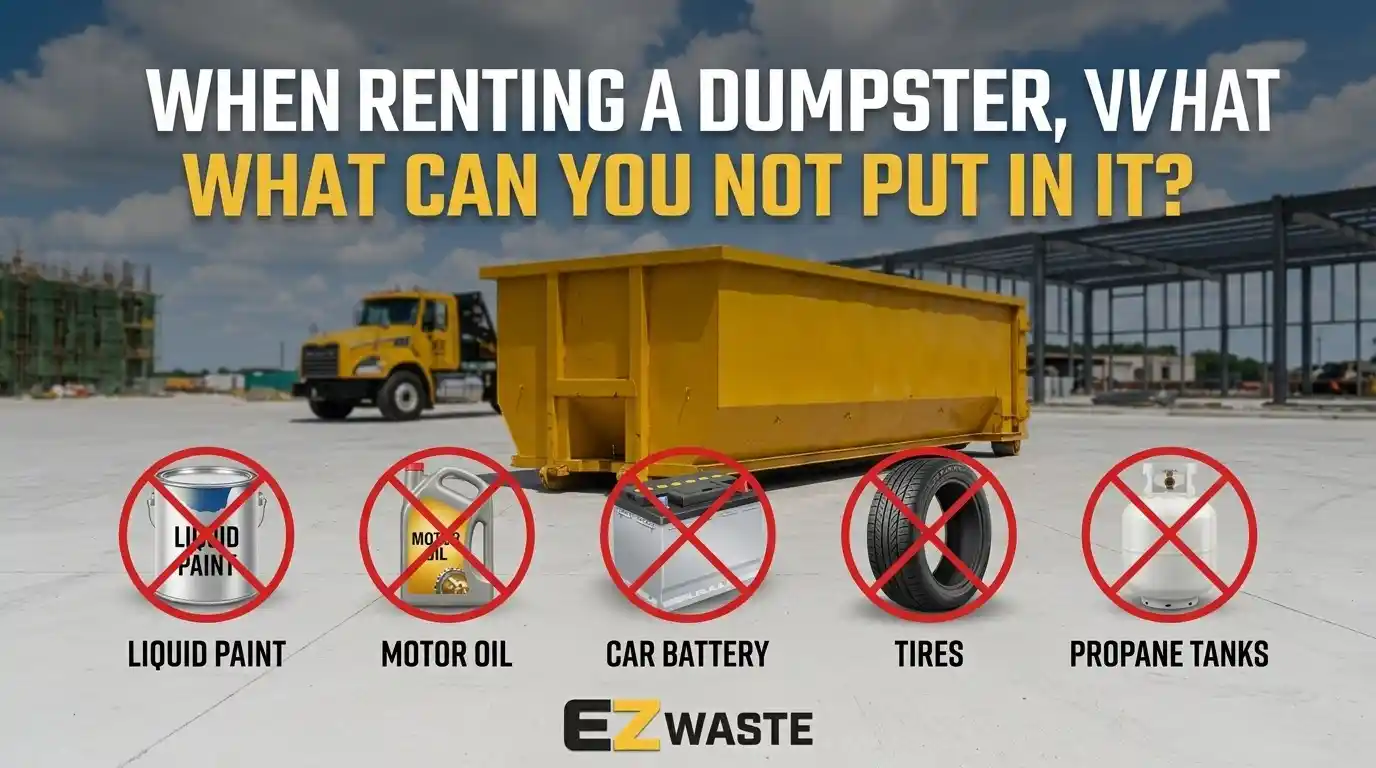
As a general rule, items prohibited in roll-off dumpsters include liquid paint, motor oil, car batteries, hazardous household chemicals, tires, propane tanks, and refrigerants because they pose severe environmental risks and landfill fire hazards. Placing these restricted materials inside a standard debris container violates municipal environmental codes and results in additional handling charges.
Prohibited Items in Dumpster Rental: Key Categories
To help you avoid project delays and extra charges, we have outlined the primary material categories restricted by local disposal facilities. Adhering to these standard dumpster rental rules ensures your waste is handled safely and responsibly.
1. Household Hazardous Waste and Chemicals
Hazardous chemicals disrupt landfill liners and present significant safety risks to waste collection crews. You must never discard drain cleaners, lawn pesticides, pool chemicals, motor oil, or industrial solvents in a standard waste container. According to the United States Environmental Protection Agency (EPA):
“EPA considers some leftover household products that can catch fire, react, or explode under certain circumstances, or that are corrosive or toxic as household hazardous waste. Products, such as paints, cleaners, oils, batteries, and pesticides can contain hazardous ingredients and require special care when you dispose of them.”
If your project involves clearing out an old workshop or storage unit with unidentified liquid containers, set them aside for specialized county collection events rather than placing them in a hazardous waste dumpster.
2. Paints, Stains, and Liquid Adhesives
Property owners frequently ask: can you put paint in a dumpster? The answer depends on the chemical composition and state of the paint. Liquid latex paint, oil-based paint, lacquers, wood stains, and liquid adhesives are strictly barred from roll-off bins. Liquid paint leaks during transit, staining roadways and contaminating entire loads of recyclable material.
However, latex paint can be accepted if it is completely dried and solidified using cat litter, sawdust, or a paint hardener. Oil-based paints, conversely, remain flammable and always require special disposal facilities.
3. Batteries and Electronic Waste
Another common contractor query is: can you put batteries in a dumpster? Auto batteries, heavy lead-acid units, and lithium-ion battery packs contain heavy metals and corrosive acids that contaminate soil or spark landfill fires. While small household alkaline batteries are sometimes permitted in minimal quantities, bulk battery disposal is prohibited under standard roll off dumpster restrictions.
4. Pressurized Tanks, Tires, and Refrigerants
Pressurized tanks such as propane cylinders, oxygen tanks, and helium canisters carry severe explosion risks when compacted. Tires are excluded from standard municipal landfills because they trap methane gas and damage landfill capping layers. Additionally, appliances containing refrigerants (refrigerators, air conditioners, freezers) must undergo certified Freon removal before disposal.
Allowed vs. Prohibited Materials Reference Guide
Review this reference table when sorting debris on your job site to verify what cannot go in a dumpster before loading:
| Material Category | Allowed in Container | Prohibited / Restricted |
|---|---|---|
| Construction Debris | Drywall, framing lumber, shingles, tile, brick | Asbestos materials, lead pipes, liquid chemicals |
| Household Debris | Furniture, mattresses, carpeting, cardboard, clothing | Freon appliances, large electronics, liquid solvents |
| Yard & Heavy Waste | Tree limbs, brush, soil, rocks, aggregate debris | Automotive tires, battery units, hazardous liquids |
| Concrete Debris | Clean concrete blocks, pavers, and foundation slabs | Concrete mixed with trash, oil spills, or chemicals |
Note: Clean masonry rubble like unreinforced concrete can also be processed separately. For commercial demolition or site clearing, utilizing concrete waste disposal near me options allows clean aggregate to be repurposed into recycled base material rather than taking up landfill space.
What Happens If You Put Prohibited Items in a Dumpster?
When a container arrives at a local transfer station or regional landfill, operators inspect the load before dumping. Placing restricted items inside your bin creates direct operational issues and unexpected costs:
- Landfill Rejection: Landfill inspectors may reject the entire load, requiring the hauler to transport the container back to your property for sorting.
- Specialized Hazardous Handling: If hazardous chemicals, fuels, or batteries are discovered, facility operators must dispatch trained HazMat personnel to isolate the waste safely.
- Dumpster Rental Extra Fees: The substantial labor costs, sorting surcharges, and secondary transport fees imposed by landfills are passed along to the customer.
- Environmental Regulatory Fines: Improper disposal of toxic materials like motor oil or solvents can trigger city or state environmental enforcement fines.
To avoid these complications, always ask your provider before loading any item that appears questionable.
Real-World Field Examples: How Mistakes Happen
Drawing from over 25 years of hands-on waste management experience in Greater Houston, our team frequently observes honest customer mistakes during residential cleanouts. For instance, homeowners clearing out garages often place old car batteries, half-empty paint cans, or lawn chemicals at the bottom of a bin before loading furniture over them.
In commercial remodeling, workers sometimes toss wet buckets of tile adhesive or waterproofing sealant directly into construction bins. Under heavy debris, these containers rupture, spreading liquids throughout the load. Identifying these materials in advance prevents unexpected contamination penalties.
Practical Tips for Managing Prohibited Items
If your cleanup project involves prohibited items in dumpster rental loads, follow these safe disposal alternatives:
- Participate in Local HHW Days: The City of Houston and Harris County sponsor regular Household Hazardous Waste collection days for paints, chemicals, and pesticides.
- Take Advantage of Auto Store Recycling: Local auto supply stores accept used motor oil, transmission fluid, and car batteries for free recycling.
- Solidify Water-Based Paint: Mix leftover latex paint with kitty litter or sawdust in a cardboard box until completely dry before placing it in routine trash.
Avoid Extra Charges: Call EZ Waste Before You Load
Understanding prohibited items in dumpster rental agreements protects your project budget and prevents unexpected handling fees. Before throwing any questionable liquid, chemical, battery, or appliance into your bin, reach out to EZ Waste for clear advice. Our knowledgeable local team will guide you on permitted materials, help you coordinate specialized recycling, and keep your job site moving efficiently.
Not sure if something can go in your dumpster? Call EZ Waste before you load it. We will help you understand what is allowed and what may require special disposal.