
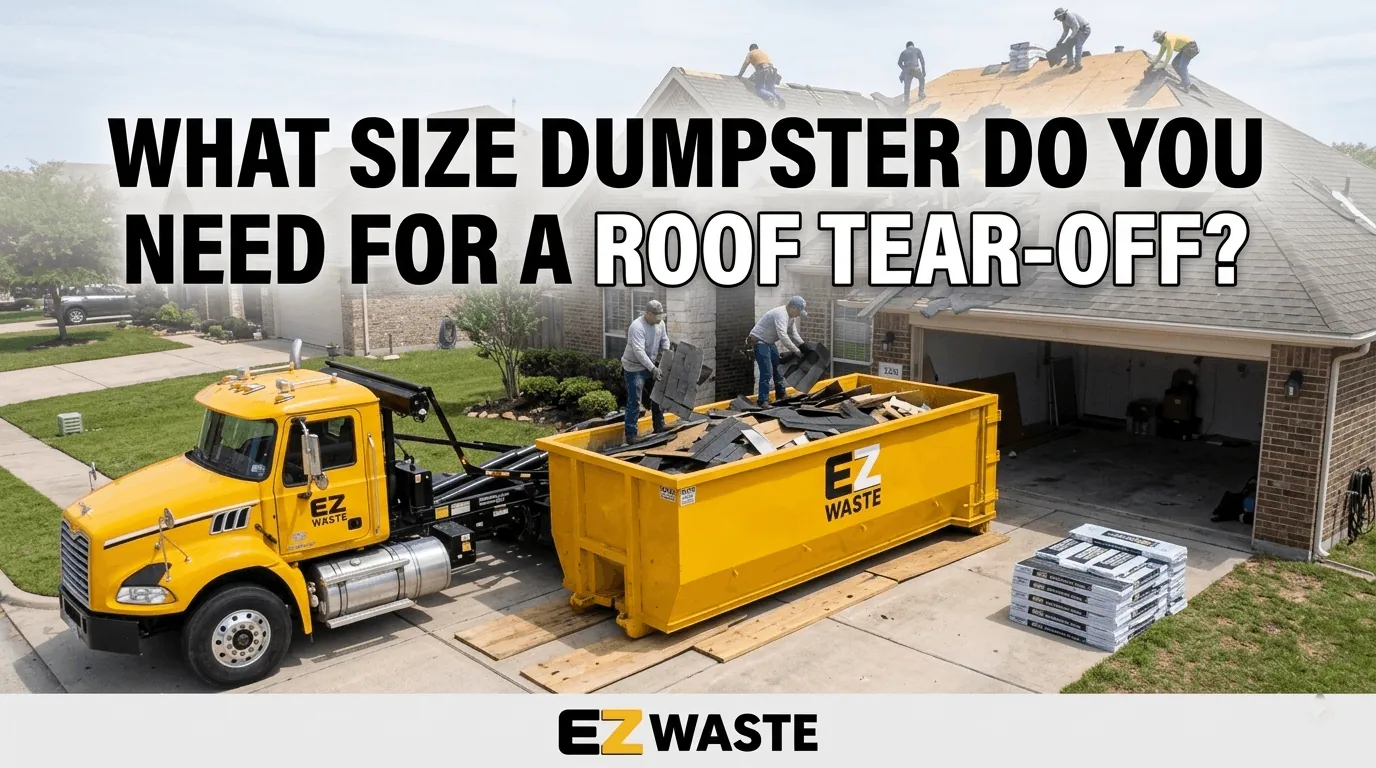
When planning a residential or commercial roof replacement in Greater Houston, selecting the correct container capacity is essential for controlling job costs and maintaining site safety. Removing old asphalt shingles, felt underlayment, flashing, and rotten decking generates heavy debris quickly. Choosing the wrong container can lead to overloaded equipment, delivery delays, or unexpected weight overage fees.
Direct Answer: For a standard single-family residential roof replacement (20 to 30 roofing squares with a single layer of 3-tab asphalt shingles), a 20-yard container is the most efficient choice. For larger homes (over 30 squares), multi-layer tear-offs, or heavy architectural shingles, a 30-yard container is required to manage total volume and legal highway hauling weight limits.
Understanding Roofing Debris Weight vs. Dumpster Volume
Roofing materials are significantly heavier than general residential trash or wood waste. When renting a container for roofing material, volume is rarely the primary constraint; weight limits dictated by the Texas Department of Transportation and local road regulations dictate container capacity.
Roofing contractors measure roof area in “squares,” where one roofing square equals 100 square feet of roof surface. Understanding how different materials affect container tonnage helps prevent overloaded haulers:
- 3-Tab Asphalt Shingles: Standard 3-tab shingles weigh approximately 200 to 250 pounds per square. A single layer across 25 squares weighs between 2.5 and 3.1 tons.
- Architectural Shingles: Heavy-duty dimensional or architectural shingles weigh 350 to 400 pounds per square. A single layer across 25 squares weighs between 4.3 and 5.0 tons.
- Multiple Shingle Layers: Homes with two existing layers of shingles double the total weight removed during demolition. A 20-square, double-layer architectural tear-off can generate over 7.5 tons of dense waste.
- Substrate Debris: Plywood decking, cedar shakes, wet felt, underlayment, nails, and metal flashing add extra weight that must be factored into total capacity planning.
Sizing Matrix: Matching Your Roof Size to the Right Container
To simplify project planning, the following guide details recommended container capacities based on total roof square footage and shingle layers:
| Roof Size (Squares / Sq. Ft.) | Shingle Layers | Estimated Debris Weight | Recommended Dumpster Size |
|---|---|---|---|
| 1,000 to 1,500 sq. ft. (10-15 Squares) | 1 Layer (3-Tab) | 1.2 to 1.8 Tons | 10-Yard Low-Boy Container |
| 1,500 to 3,000 sq. ft. (15-30 Squares) | 1 Layer (3-Tab or Architectural) | 2.5 to 4.5 Tons | 20-Yard Container |
| 3,000 to 4,500 sq. ft. (30-45 Squares) | 1 or 2 Layers (Mixed) | 5.0 to 9.0 Tons | 30-Yard Container |
| 4,500+ sq. ft. (45+ Squares) | Multiple Layers or Commercial | 9.0+ Tons | 40-Yard Container or Multi-Load Swap |
Choosing Between a 20-Yard and 30-Yard Container for Roofing Projects
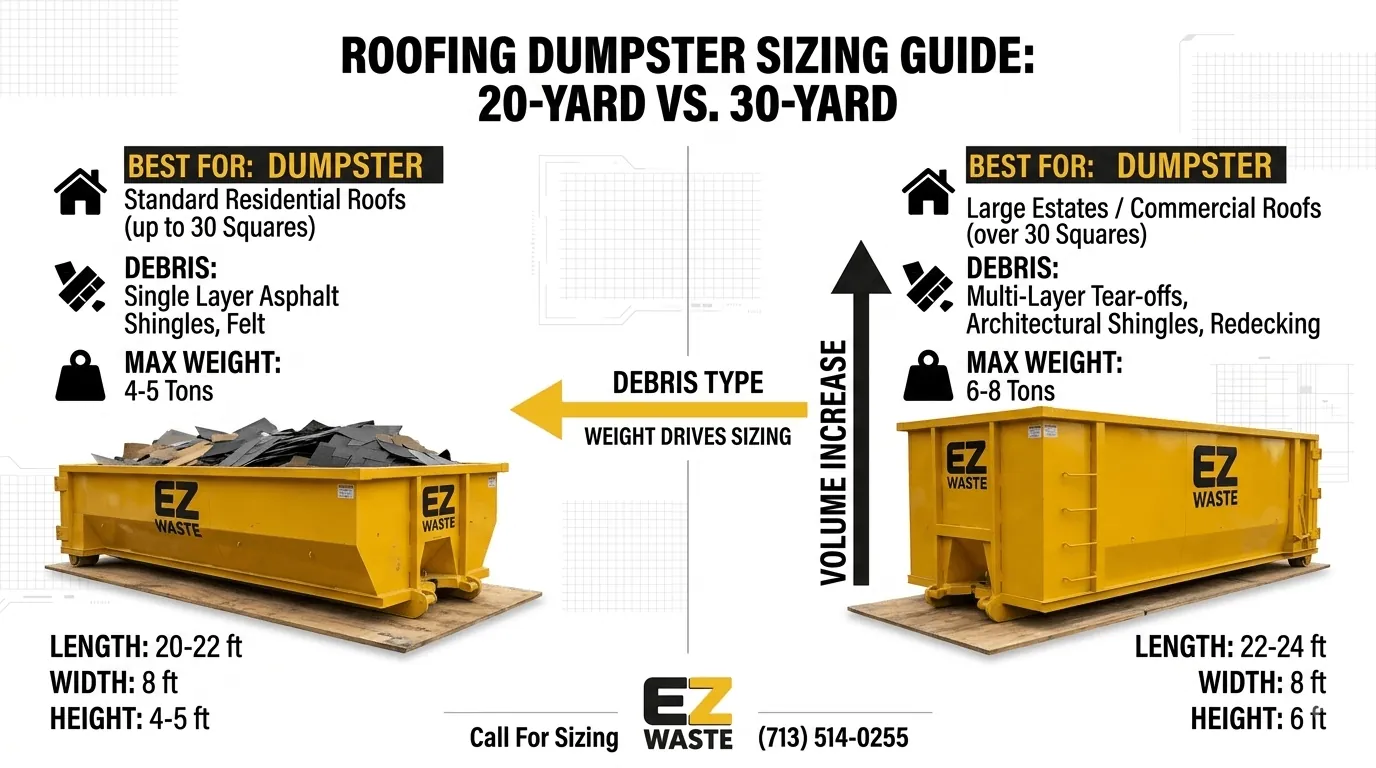
Most residential projects in Harris County rely on two primary container sizes. Understanding when to upgrade prevents unexpected site delays.
When to Rent a 20-Yard Dumpster for Roofing
A 20 yard dumpster for roofing is the standard workhorse for local residential contractors. Holding up to 20 cubic yards of material, this container fits comfortably in standard driveways while offering ideal side-wall loading heights for roofing crews dropping shingles directly off eaves. It safely handles single-layer tear-offs on homes up to 3,000 square feet without exceeding road legal weight limits.
When to Select a 30-Yard Container
For large estate homes, commercial properties, or complete redecking projects, upgrading to a 30 yard dumpster provides necessary capacity. If a roof has two layers of thick architectural shingles, or if crew members are replacing extensive amounts of rotten plywood decking alongside old shingles, a 30-yard container ensures all debris fits safely below the top fill line.
Critical Factors That Impact Roofing Dumpster Rental Options in Houston
Roof replacement projects across Greater Houston present unique operational variables that property owners and job captains must address before booking equipment.
1. Local Weather Patterns and Sudden Storm Demands
Gulf Coast weather brings intense rain, hail, and tropical storms, causing widespread emergency repairs. Prompt waste removal keeps job sites clear and prevents water damage to exposed structures. Partnering with a reliable regional provider ensures timely drop-offs and rapid container swaps when weather windows are tight.
2. Weight Allowance Regulations and Transport Safety
Texas Department of Transportation regulations enforce strict weight limits for commercial haulers on state roads. Exceeding legal axle weight limits prevents transport drivers from picking up loaded bins. Distributing heavy shingle weight evenly across the floor of the container avoids dangerous weight distribution issues during transport.
3. Driveway Protection and Placement Safety
Heavy roll-off containers can damage concrete driveways or asphalt surfaces if placed improperly. Utilizing wooden protective boards under container rollers absorbs weight concentration and protects residential concrete from cracking under heavy debris loads.
Best Practices for Loading a Roofing Debris Dumpster
Efficient container loading maximizes space and prevents costly load adjustments before haul-away:
- Distribute Weight Evenly: Spread heavy bundle debris across the bottom floor rather than piling shingles in one corner.
- Keep Loads Level with Top Rails: Materials extending above the top rail pose road hazards and violate state transit safety regulations. Haulers cannot legally haul overflowing containers.
- Separate Non-Permitted Debris: Keep hazardous materials, paint cans, liquids, or general household chemical waste out of your roofing container.
“Proper disposal of construction waste and old asphalt roofing protects community infrastructure and supports regional materials recycling networks.”
How EZ Waste Delivers Dependable Roofing Dumpster Rentals in Houston
Managed under the experienced leadership of Bernard Gonzalez Jr. and the Gonzalez family founding partners, EZ Waste brings more than 25 years of local operational expertise to Greater Houston construction projects. We provide tailored waste management solutions designed specifically for fast-paced roofing tear-offs:
- Precision Equipment Placement: Our skilled drivers place containers accurately to safeguard driveways, landscaping, and access gates.
- Rapid Container Swaps: On high-volume commercial jobs, our fleet executes quick container swaps to keep work crews moving without downtime.
- Comprehensive Service Coverage: From Spring and Cypress to Katy, Pasadena, and central Houston, we deliver reliable equipment right to your job site.
Need specialized equipment for an upcoming renovation or commercial build? Our site coordination team is standing by to help manage your haulage logistics.
Ready to select the ideal bin size for your roof tear-off? Request help choosing the right dumpster size today.